



Architecture, Building, Hospital, Clinic, Bag, Person, Medical Procedure, Operating Theatre, Accessories, Handbag

Professor of Midwifery and Discipline Lead

Job ID: 494184

Applications close: 13 April 2026

For enquiries: Professor Tony Perkins, Dean, School of Health or Kristie Husk, Talent Acquisition Manager

Position overview

The Professor of Midwifery and Discipline Lead is a senior academic leadership role within the School of Health at UniSC. Reporting to the Dean, this position provides strategic and operational leadership for Midwifery across research, learning and teaching, and engagement.

This appointment recognises the importance of Midwifery to the University’s health portfolio and to the communities we serve. The Professor of Midwifery will strengthen the discipline’s research performance, lead high-quality and professionally accredited programs, and contribute to the continued development of Midwifery nationally and internationally.

The role requires an internationally recognised midwife academic with a sustained and influential research track record, demonstrated success in securing competitive funding, and experience leading academic teams. As Discipline Lead, the Professor will align Midwifery priorities with School and University strategy, support staff development, and ensure students experience high standards of education and professional preparation.

The position is primarily based at UniSC’s Sunshine Coast campus and may require work across campuses during the academic year.

Why join UniSC?

UniSC is a young, ambitious university with a clear purpose: to transform lives through learning and knowledge in every place we operate and with every community we serve. Our size and stage of growth create genuine opportunity for senior academics to shape direction, influence strategy and see the impact of their leadership.

For a Professor of Midwifery and Discipline Lead, this is an opportunity to:

  • Shape a growing discipline - Midwifery at UniSC is positioned for continued development. As Discipline Lead, you will influence academic direction, build capability within the team, and strengthen the discipline’s research profile and professional standing.
  • Lead with impact - UniSC’s regional footprint across South East Queensland creates strong connections with health services and communities. Your research and engagement can directly inform practice, policy and workforce development in ways that are visible and meaningful.
  • Work within a collaborative environment - UniSC values collegiality and shared achievement. Professors play an active role in mentoring colleagues, building research teams and contributing to a positive academic culture. You will work closely with the Dean and senior leaders in a School committed to performance, accountability and support.
  • Advance research excellence - The University is focused on increasing research productivity, competitive grant success and HDR supervision capacity. As a Level E academic, you will have the platform to lead major research initiatives, strengthen national and international partnerships, and mentor the next generation of researchers.
  • Influence professional standards and accreditation - With responsibility for ANMAC accreditation and strong sector engagement, this role provides the opportunity to contribute to the ongoing development of Midwifery education and standards in Australia and internationally.
  • Contribute to an inclusive and values-led institution - UniSC is committed to integrity, community and sustainability. We foster culturally capable, inclusive and respectful environments where staff and students can perform at their best.

This role offers both responsibility and opportunity, to lead a discipline, elevate research performance, strengthen professional partnerships and contribute to improved maternal and newborn health outcomes through education and scholarship.

About

About the Role

The School of Health delivers professionally accredited programs that respond to workforce needs and community priorities. Midwifery is a core discipline within the School, contributing to improved maternal and newborn outcomes through education, research and professional engagement.

The Professor of Midwifery and Discipline Lead will:

  • Lead the strategic direction and academic performance of the Midwifery discipline
  • Oversee and guide accreditation processes with the Australian Nursing and Midwifery Accreditation Council (ANMAC)
  • Strengthen research capacity and output within the discipline
  • Mentor early- and mid-career academics
  • Foster a collegial, high-performing and inclusive academic environment

This role combines academic leadership with sector engagement. The successful appointee will have demonstrated impact on the development of the Midwifery profession and will bring established national and international networks that support research collaboration, professional influence and student opportunity.

Registration as a Midwife with AHPRA and completion of a doctoral qualification in Midwifery or a related field are essential.

Key Accountabilities

Specific accountabilities for this role include:

Learning and Teaching

  • Provide strategic leadership in Midwifery learning and teaching.
  • Lead the design, development and continuous improvement of curricula, ensuring programs remain contemporary, research-informed and aligned with professional standards.
  • Oversee ANMAC accreditation and maintain compliance with regulatory requirements.
  • Support high-quality teaching practice across the discipline and mentor colleagues in curriculum innovation and delivery.
  • Promote student engagement, progression and success through strong academic leadership and quality assurance processes.
  • Contribute to learning and teaching scholarship and sector leadership at national and international levels.

Research

  • Maintain an internationally recognised and coherent research program in Midwifery.
  • Secure external competitive research funding and lead significant research initiatives.
  • Publish consistently in high-quality peer-reviewed journals and demonstrate measurable research impact.
  • Lead and mentor research teams, including supervision of Higher Degree by Research candidates.
  • Develop and sustain strategic research partnerships locally, nationally and internationally.
  • Contribute to a research culture that supports excellence, integrity and collaboration.

Engagement

  • Represent UniSC and the Midwifery discipline in national and international professional forums.
  • Contribute to discipline development through participation in expert panels, advisory bodies and assessment committees.
  • Build and maintain productive partnerships with health services, professional bodies and community organisations.
  • Support regional workforce development and contribute to improved health outcomes through applied scholarship and professional engagement.

Governance and Health and Safety

  • Provide strategic and operational leadership for the Midwifery discipline, including workforce planning and resource management.
  • Contribute to School and University governance, planning and policy development.
  • Foster a positive, respectful and culturally capable academic environment consistent with UniSC’s values of integrity, community and sustainability.
  • Ensure compliance with University policy, professional standards and legislative requirements.
  • Promote and uphold workplace health and safety obligations, including compliance with Queensland Health immunisation requirements.

Selection Criteria

Applicants need to demonstrate they meet the following knowledge, skills and experience:

  1. Registration as a Midwife with AHPRA, completion of a doctoral qualification in Midwifery or related field and extensive experience as an academic leader.
  2. Experience of strategic and operational leadership (including workforce planning, program planning, resource management efficiency) at a School, Discipline or Program level, specifically in Midwifery.
  3. Involvement in the development of the Midwifery profession at a national and international level, and evidence of having made a clear and formative impact in Midwifery.
  4. A clear and coherent research program with: a strong track record of active, sustained and productive engagement in high-quality research; publicly verifiable outputs and outcomes from research; external recognition of research performance and achievement; quality supervision of candidates for Higher Degrees by Research; and impact of research.
  5. Quality academic leadership, for example through: effective mentoring to develop the research capability and capacity of individual and teams of mid-career and early-career Researchers; substantial leadership contributions in Midwifery that strengthen the University’s teaching programs, research capacity, capability and culture; and a consistent record of service on national discipline panels, such panels of experts and other assessment panels.
  6. Effectiveness as a teacher, which is evidenced by both exemplary teaching practice and leadership in teaching, the ultimate outcome of which is student engagement and success.  For example, by: Leadership and/or implementation of research-led approaches to learning and teaching in the design and development of curricula; Leadership of learning and teaching development processes which improve teaching practice within and/or beyond the University; and sustained formal recognition for excellence in learning and teaching.
  7. Strong leadership contributions and personal qualities that influence the development and maintenance of a positive academic environment which is conducive to high levels of engagement and standards of achievement for both staff and students.
  8. Participation and success in academic administrative functions e.g. course/program/discipline coordination and/or leadership, within a University.
  9. Experience in leading external accreditation of Midwifery programs/degrees by the Australian Nursing and Midwifery Accreditation Council (ANMAC).
  10. The ability to develop and maintain productive regional, national and international partnerships that reap significant benefits for the University.
  11. Formal external and/or internal recognition for excellence in learning and teaching and/or research (Desirable) 

Recruitment process

How to apply

Your application should include:

  • Resume
  • A cover letter not to exceed one page. This statement should outline your skills, knowledge and qualities that will make you a success at UniSC.
  • A response to key selection criteria. You must respond to this within the application form for this job.

Closing date 

Applications close: midnight, Monday 13 April 2026.

Contact 

If you have any questions about the position or for a confidential discussion, please contact:

Professor Tony Perkins, Dean, School of Health

Email: deanSH@usc.edu.au

or

Kristie Husk, Talent Acquisition Manager

Email: khusk@usc.edu.au Tel: +61 418 884 610

Candidates may be requested to undergo psychometric testing and give permission for verification of their tertiary qualifications.

Prospective candidates interested in applying for this position must demonstrate eligibility to work full-time in Australia. Employment sponsorship opportunities are available for qualified candidates.

Adult, Female, Person, Woman, Wristwatch, Hospital, Patient, Necklace, Painting, Face

The environment

The University of the Sunshine Coast is structured around its areas of expertise. UniSC has five schools that cover health, business and creative industries, science, technology and engineering, law and society and education.

In 2026 UniSC is Celebrating 30 years. From our first campus at Sippy Downs which began welcoming students in 1996, UniSC has rapidly expanded its campus footprint to now include five award-winning campuses across South East Queensland, from Petrie in Moreton Bay to the Fraser Coast and UniSC Adelaide.

UniSC has undergone a significant evolution of our learning and teaching to improve the reach and impact of classes. It has offered more students access to a range of learning materials that are relevant and more meaningful than the traditional lecture. Examples include podcasts, interviews, simulations, screencasts, recorded discussions and formative quizzes, along with seminars, that are dependent on the learning outcomes of each individual course.

Whilst learning materials are delivered through the University’s learning management system, student engagement is achieved either on-campus in a blended mode – with on-campus tutorials, practicals, seminars and laboratories – or through an online experience.

At UniSC research spans multiple disciplines. Our teams pursue and share new knowledge and collective understanding, and bold solutions that bring about real impact and positive change that helps move everyone forward. Across our campuses, the next generation of researchers are answering some of today’s most pressing issues, focused on ensuring healthier people and a healthier planet. UnISC has 6 world leading research Institutes including: the Thompson Institute - with a focus on mental health and wellbeing and the recently opened National Centre for PTSD research; Centre for Bioinnovation - contributing to drug discovery, disease diagnostics and therapeutics; and the Australian Centre for Pacific Islands Research - committed to co-designing research projects and evidence-based solutions with Pacific Island communities.

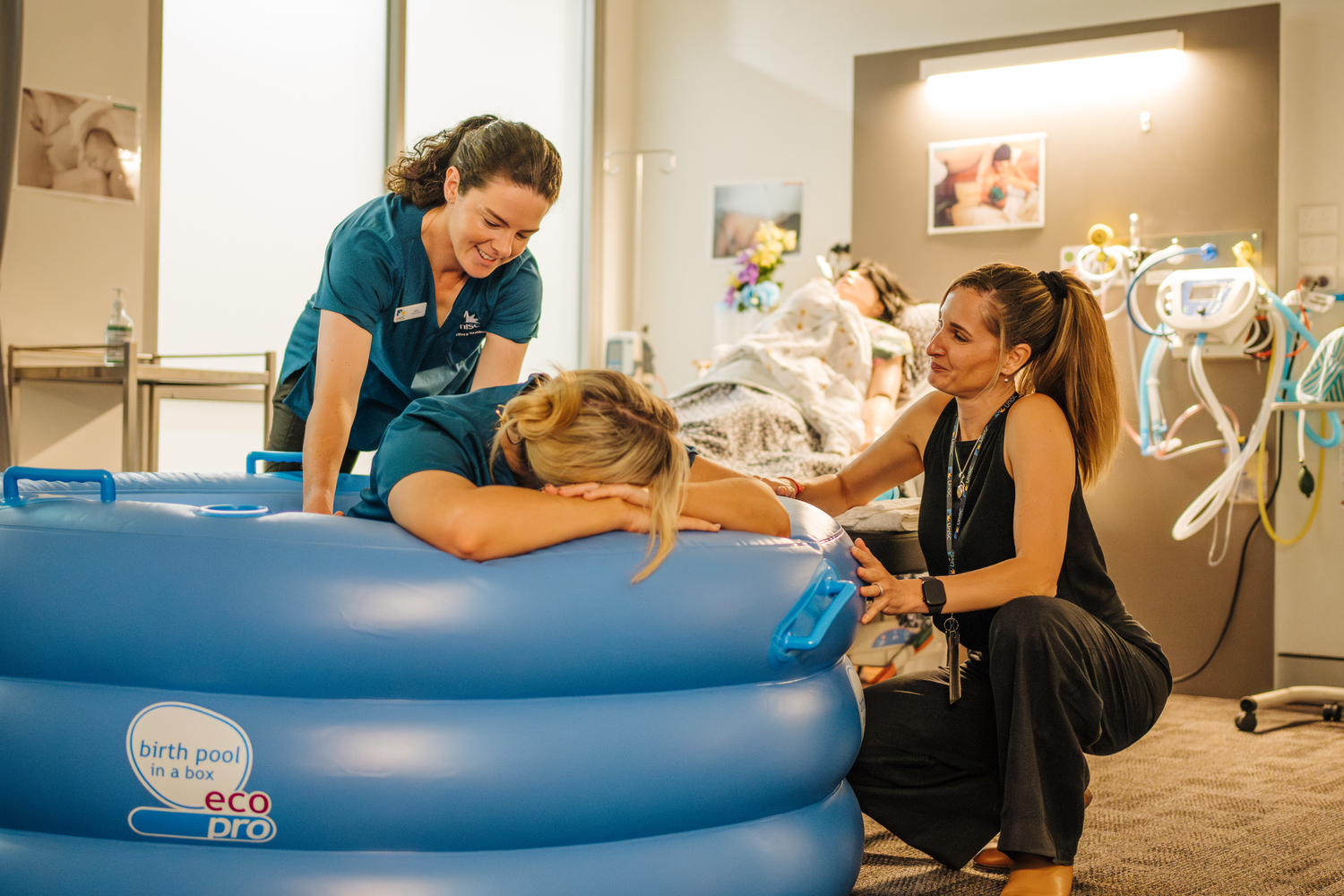
At the forefront of health professional education and research, the School of Health at UniSC offers an exceptional learning environment equipped with state-of-the-art facilities and cutting-edge technology. Our modern laboratories, simulated paramedic suites, and nursing and midwifery wards provide students with hands-on experience that closely mirrors real-world scenarios, preparing them for successful careers in health care.

Under the guidance of our world-class researchers and industry experts, students have the opportunity to pursue their research passions and contribute to impactful discoveries.

Our comprehensive range of study programs covers various fields within the health sector, including biomedical science, midwifery, nursing, nutrition and dietetics, occupational therapy, paramedicine, psychology, public health, and sport and exercise science. Each program is designed with a focus on international, regional, and community health priorities, ensuring that our graduates are equipped with the knowledge and skills needed to make meaningful contributions to the health and wellbeing of diverse populations.

As a passionate and dedicated team of health professionals, we are committed to excellence in both education and research. Research in the School of Health is focused into five Research Clusters; Cancer Research, Healthy Ageing, Mental Health and Wellbeing Across the Lifespan, MOTION, Transformative Health Professions Education.  An additional Research Cluster in Women’s Health and Wellbeing is currently under development. 

Our research endeavours have been recognised with numerous accolades. In 2025 our research productivity included $6.9 m in awarded funding for 50 projects,  436 publications, and the supervision of 191Higher Degree by Research (HDR) students. With 200 full-time equivalent (FTE) academic staff, we continue to push the boundaries of knowledge and innovation in the field of health.

Under the guidance of our world-class researchers and industry experts, students have the opportunity to pursue their research passions and contribute to impactful discoveries.

Join us at the School of Health at UniSC as we work together to advance knowledge, promote wellness, and create positive change in our communities. With an enrolment of over nearly 10,000 students, our vibrant academic community is fuelled by a shared passion for improving health outcomes and making a difference in the world.

Midwifery is a practice-focused, professionally accredited academic discipline within the School of Health. It prepares students to become competent, reflective and evidence-based midwives capable of providing care across the childbearing continuum, from pregnancy to childbirth and into the postnatal period.

UniSC offers a dedicated Bachelor of Midwifery degree that equips students with theoretical knowledge, practical clinical skills and the professional competencies required for midwifery practice and registration in Australia. The program emphasises the social, cultural, psychological and biological aspects of midwifery care, integrating simulated learning with substantial clinical placements in healthcare settings.

For students seeking to extend their capability into research and advanced practice, UniSC also offers a Bachelor of Midwifery (Honours), a one-year honours pathway with a strong focus on research methodology and a substantial research project, designed to build academic research skills and support progression into research-focused careers or further postgraduate study.

The discipline also supports mid-career health professionals through a Graduate Diploma in Midwifery, enabling registered nurses to qualify as midwives. This pathway combines advanced coursework with clinical experience to prepare graduates for professional midwifery practice.

Practical learning is central to the Midwifery discipline. Students complete clinical placements in a range of settings, including hospitals, community maternity services and private practice environments, and participate in the Connect Program, which meets Australian Nursing and Midwifery Accreditation Council (ANMAC) requirements for continuity of care experiences with pregnant women and their families.

The discipline is supported by modern simulation facilities, partnerships with health service providers, and industry connections that enhance learning, research and graduate employability. Midwifery at UniSC reflects the University’s commitment to high-quality professional education, community engagement and improving health outcomes across diverse populations.

A better tomorrow starts today


Tomorrow is an exciting place. It’s also a place full of unprecedented global challenges. With future-focused degrees, world-leading sustainability research and 5-star teaching,* we share our knowledge, experience and tools to create a better tomorrow for all.

*Good Universities Guide 2023/24

The Organisation

UniSC’s organisational structure supports its ambitious agenda. Strong portfolios and flat, clear reporting lines facilitate accountability, flexibility and responsiveness.

Key statistics

A young university at the epicentre of progress. We’re a growing, comprehensive university focused on excellent teaching, ground-breaking research, championing sustainability, and producing award-winning alumni.

Our rankings

We’re a growing, comprehensive university focused on excellent teaching, ground-breaking research, championing sustainability, and producing award-winning alumni. 

Annual Report

View our achievements, challenges and performance against key indicators in our Annual Report.

Strategic Plan 

Our aspiration over the next ten years is to adopt a challenger mindset and be globally recognised in the following domains: Student success by design; World-class research at scale; Sustainability leadership; and Expanding global footprint.

Locations

UniSC stands as the world's sole university with campuses situated within three interconnected UNESCO biosphere reserves and the UNESCO World Heritage Listed K’gari.

Discover